

2025 Ferrari 12Cilindri Bianco Artico
By Lorenzo Bianchi May 3, 2024
There\n has been a single leitmotif that has been thrilling Prancing Horse \nenthusiasts since 1947: the naturally-aspirated, mid-front-mounted V12, \nthe very first Ferrari engine to roar its way through the factory gates \nin Maranello. Unveiled today to public and media against the spectacular\n backdrop of Miami Beach in celebration of the 70th anniversary of \nFerrari’s arrival on the American market, the Ferrari 12Cilindri is\n the natural evolution of the company’s uncompromising powertrain \nphilosophy, which over the decades has continued to develop without ever\n straying from its original DNA and the marque’s core values.
The\n Ferrari 12Cilindri is inspired by the legendary Grand Tourers of the \n1950s and ‘60s, embodying the front-mounted Ferrari V12 two-seater \nmission with its effortless combination of elegance, versatility, and \nperformance. The car represents the latest evolution in this bloodline \nand continues that unique legacy, elevating it towards new standards in \nperformance, comfort, and design. Its silhouette exudes sportiness and \nclass: simple yet harmonious lines feature an integrated active \naerodynamic device to guarantee peerless performance, a front-hinged \nbonnet that exalts the view of the engine bay, and the two twin \ntailpipes that have become a signature of Ferrari’s 12-cylinder cars.
The\n Ferrari 12Cilindri’s engine is the latest development of the iconic V12\n that laid the foundations for the Maranello legend, in this version \nunleashing 830 cv and with maximum revs rising to a heady 9500 rpm. The \nimpressive power curve ensures 80% of total torque is already available \nat just 2500 rpm, resulting in instantaneous pick-up for maximum \naccelerator response and a feeling of never-ending power all the way to \nthe red line.
The\n Ferrari 12Cilindri’s cockpit guarantees superb comfort for both driver \nand passenger, even on long journeys: its feeling of airiness and space \nis heightened still further by a glass roof, prestigious materials and a\n central display in addition to one for the driver and a third ahead of \nthe passenger.
The\n Ferrari 12Cilindri is aimed at driving enthusiasts, but also at those \nwho demand new standards of performance, comfort and design: \nlong-standing Ferraristi, loyal to the unique emotions that only the \nFerrari V12 can deliver, as well as new clients dreaming of combining \ncomfort and Italian design with exhilarating driving pleasure. The \nFerrari 12Cilindri is designed for connoisseurs with a very clear vision\n of what Ferrari’s DNA has always been, truly making it a car for the few.

POWERTRAIN
The\n F140HD engine equipping the Ferrari 12Cilindri is the new version of \nthe iconic naturally-aspirated Ferrari V12, the purest expression of \nFerrari’s soul: its peerless performance, powerful soundtrack and \nexclusivity make it the worthy heir to the legendary berlinetta sports \ncars that wrote some of the most glittering chapters in the marque’s \nhistory. The engine can unleash up to 830 cv while its max revs have \nbeen increased to 9500 rpm by adopting challenging and innovative \nsolutions.
The\n engine features modified components and software, some of which were \nalready adopted on the special series 812 Competizione, ensuring it tops\n its category in terms of performance. To allow the V12 to rev so high, \nthe engineers worked to reduce the weight and inertia of the engine’s \ncomponents, adopting titanium con rods, which guarantee a saving of 40% \nin rotating mass compared to steel with the same mechanical resistance. A\n different aluminium alloy was used for the pistons, making them lighter\n than on previous applications. Further weight reduction was gained by \nthe adoption of a rebalanced crankshaft which is 3% lighter.
The\n valvetrain with sliding finger followers is derived from Ferrari’s \nunparalleled experience in Formula 1 and was developed specifically for \nthe V12 with the aim of reducing mass and availing of more \nhigh-performance valve profiles. The sliding finger follower, which is \nsteel with a Diamond-Like-Carbon (DLC) coating, transmits the action of \nthe cam to the valve using a hydraulic tappet as the pivot for its \nmovement. The use of DLC reduces the coefficient of friction at critical\n points, significantly improving the mechanical efficiency of the \nengine.
Most\n of the modifications focused on optimising torque delivery in all \noperating conditions. The result is an engine with exhilaratingly \nsmooth, seamless response, that delivers peak power at the red line.
The\n manifold and the plenum layout is now very compact: shortening the \nlength of the tracts and optimising the cam profiles allows power to be \nunleashed at high revs, while the torque curve is optimised at all \nengine speeds by a system of variable geometry inlet tracts which \nenables the length of the intake tract to be continuously varied to \nmaximise the dynamic charge in the cylinder.
For\n the very first time on a naturally-aspirated engine, an innovative \nsoftware strategy was developed that can modify the maximum torque \navailable as a function of the gear selected. This gives the driver the \nfeeling of smooth, progressive pick-up as the transmission ratio \nincreases, another vital factor in making the driving exhilaration \ndelivered by the Ferrari 12Cilindri truly unique.
A\n crescendo of never-ending acceleration and power delivery has been a \nsignature of all Ferrari V12s. Now innovative Aspirated Torque Shaping \n(ATS) has allowed Maranello engineers to sculpt the torque curve in \nthird and fourth gears using sophisticated electronic control that \nimproves perception of the torque without impinging on acceleration, all\n to the benefit of driving pleasure. The introduction of new gear ratios\n furthermore keeps acceleration levels high and allowed the engineers to\n define a new torque curve shape for an aspirated engine.
Optimising\n the engine’s mechanical efficiency and that of the lubrication circuit \nis critical to delivering blistering performance and low fuel \nconsumption. The calibration of the variable displacement oil pump \nallows the oil to circulate throughout the entire engine and then be \nrecovered along with the vapours from the sump. A solenoid valve, \ncontrolled by the engine ECU in a closed loop, is used to control the \npump’s displacement in terms of engine revs and pressure, delivering \nonly the amount of oil required and thereby simultaneously saving a \nsignificant amount of energy. The new configuration of the oil tank and \npump’s hydraulic circuit reduces losses to a minimum and optimises \nfunctionality in all operating conditions.
The\n gasoline direct injection system (GDI at 350 bar) comprises two petrol \npumps and four rails with pressure sensors that provide feedback to the \npressure control system. The electronic injectors can also control up to\n three injections per engine cycle. The ignition system is constantly \nmonitored by the engine control unit which has a single and a \nmulti-spark function. The ECU also controls combustion in the chamber to\n ensure that the engine is always working in peak thermodynamic \nefficiency conditions, using a sophisticated strategy that recognises \nthe octane rating of the fuel in the tank to avoid knocking.
The\n new exhaust system, developed to allow the car to comply with the \nlatest emissions requirements (EU6E, China 6b and Bin 50), introduces a \nceramic catalytic converter coupled with a particulate filter. This is \nthe most advanced emissions-reduction technology available and involved \nlengthy calibration of the software strategies.
Sound\n is pivotal to marrying the comfort, luxury and exhilarating driving \nemotions typical of a Ferrari V12: to this end, every element of the \nintake and exhaust lines were optimised. Equal-length exhaust tracts, \nthe 6-in-1 manifold for every cylinder bank and the innovative design of\n the central sections has resulted in Ferrari’s typical V12 howl that \ncomprises all of the noble combustion orders. The perfect integration \nand calibration of high and low frequencies coming from the intake and \nexhaust systems respectively also influence the engine’s timbre. The \nshape of the ducts and the internal fluidynamics of the silencer baffles\n have been designed to reduce backpressure to a minimum thereby \nimproving power delivery. The geometry of the forms and curves of the \nexhaust system was also perfected to guarantee the very purest notes of \nthe signature Ferrari sound all the way to the limiter.
To\n guarantee that the soundtrack in the cabin is perfectly balanced, the \nintake tract was modified: modifying the position of the resonators also\n changed the pressure waves resulting in a richer range, particularly in\n terms of the middle frequencies. The result is a cleaner, more full \nsound in the cabin in all driving conditions, but especially in sportier\n situations.
The\n Ferrari 12Cilindri sports the 8-speed DCT (Dual Clutch Transmission) \nthat received such an unanimously rapturous welcome on other cars in the\n range, starting with the SF90 Stradale. Thanks in part to larger tyres \non 21” rims, this solution delivers 5% shorter gear ratios in the lower \ngears and a 12% increase in torque at the wheels compared to previous \nV12 applications, all to the benefit of longitudinal performance under \nacceleration and gear shifting times (30% faster than the previous V12 \nberlinetta applications).
Performance\n under acceleration through the gears has been significantly improved \nand the introduction of the 8th gear improves range in motorway driving.\n The eight-speed DCT thus both improves efficiency and is more engaging \nin all gears.
DESIGN
EXTERIOR
With\n the Ferrari 12Cilindri, Flavio Manzoni and the Ferrari Styling Centre \ndesign team set out to radically transform the stylistic codes of \nFerrari’s previous mid-front-engined V12s. The car in fact marks a clear\n departure from the sculptural language that characterised the 812 \nCompetizione, for example, instead favouring a more sophisticated \nlanguage that still retains the necessary formal design rigour to \nachieve a sense of stylistic unity.
Clean\n lines dominate the car’s geometry, underscoring the volumes that make \nup a seamlessly interconnected whole. The ultra-clean flanks sweep back \nalong the entire car from a dihedral section. Although retaining a \nsignature Ferrari sensuality, the wings have been sculpted with extreme \ngeometric precision: all the lines are the result of intersections \nbetween the volumes and a more functional approach to form has been \ntaken that echews nostalgia. The muscular rear wing is imposing, yet \nalso perfectly controlled geometrically. On the front wing, that \nmuscular tension extends slightly, coming to rest along the flank and \nfurther accentuating the car’s monolithic aesthetic.
The\n sculpted bonnet is extremely sleek and incorporates the front wings. \nRemoving the cut lines from the wings gives a smooth, uninterrupted \nsurface to the muscularity of the design, lending the entire bonnet a \nsense of ultra-clean fluidity, interrupted only by two vents to cool \nthe engine bay. One of the objectives of the Ferrari 12Cilindri was to \nexplore design languages only tangentially related to the car world. The\n front has thus lost certain signature elements, such as the elongated \nform of the headlights and the traditional grille shape, in favour of \ngeometries and intersections innate to the car’s design. The headlights \nare integrated into a single wraparound band from which the DRLs emerge \nlike blades.
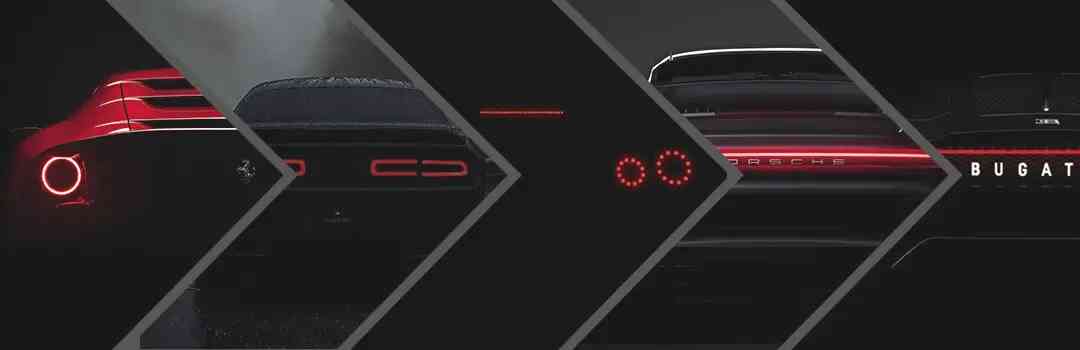
A\n similar approach has been taken with the rear architecture: once again,\n rigour is the order of the day with the shape obtained by the \nsubtraction of volume. Consistent with the front of the car the \ntaillights are set into a blade that traverses the entire, concave rear \nsection and also provides what is possibly the Ferrari 12Cilindri’s real\n signature theme, demonstrating once again how cleverly the Ferrari \nStyling Centre’s designers are able to meld technical and functional \ndemands with beauty.
Instead\n of adopting a rear spoiler, the designers have used two active flaps \nintegrated with the rear screen, creating a signature delta theme. The \noverall perception is of a seamless whole, creating the idea of a very \nhigh-tech form. The development of this concept allowed the designers to\n treat the Ferrari 12Cilindri’s cabin in a new way, tracing the frame of\n the surface in body colour to echo the rear screen theme and integrate \norganically with the rest of the cabin which itself is characterised by a\n black screen effect.
The\n tail section ends in a very clean, monolithic volume in body colour as \nwell. The lower section – in black or carbon fibre – is characterised by\n the prominent diffuser keels over which the body almost seems to float.\n This area also includes the sensors and two twin tailpipes. The latter,\n comprising four elements altogether, also have a completely new shape, \nwith a metal surround to reduce the perception of their size and create a\n more compact look.
COCKPIT
The\n design of the Ferrari 12Cilindri’s interior sees it split into three \ndifferent levels: the first, dominated by the upper part of the dash, \ncontinues around to blend into the door panel trim. Next is the central \narea while the third includes the footwells and seats. Each level is \nclearly defined, heightening the dual-cockpit effect through the colour \nand material combinations. These are used to create either an elegant or\n sporty look for the seats and other features. Ferrari’s signature \nluxury and performance are flanked on the Ferrari 12Cilindri by a focus \non environmental sustainability: extensive use has been made of \nsustainable materials such as Alcantara© containing 65% recycled \npolyester.
The\n interior style takes its inspiration from the Prancing Horse’s \ndual-cockpit architecture. In recent years, that layout was used for the\n Ferrari Roma and Roma Spider as well as the Ferrari Purosangue. The \nFerrari 12Cilindri’s cabin has an almost-symmetrical structure \ncomprising two modules for driver and passenger and offering an \nastonishing standard of comfort and involvement in the driving \nexperience.
The\n dashboard extends horizontally, a fact underscored by a clear \nseparation between the trimmed volumes in the upper section and the \ntechnical functions in the lower section. The upper section features two\n distinct binnacles dedicated to the driver and passenger \ninstrumentation and to the climate control vents. A deftly elegant \ncolour and material change draws the eye to the two volumes separated by\n the body of the dash, which seem almost to float, further enhancing the\n feeling of lightness in this area.
The\n panels of the central tunnel extend outward from the dashboard \ngeometries as if they were almost an extension of the latter. The \ntrimmed area features a large sculptural gash emphasised by contrasting \nmaterials. The armrest is in the trimmed area of the tunnel and extends \ninto the medallion area, revealing contrasting metallic edging that \ncreates an elegant intersection between the volumes. The side section of\n the tunnel itself has been scooped out, again recreating that floating \nfeeling. It is trimmed with luxury materials and also features a \nY-shaped metal element into which the iconic gate shift has been set.
On\n the Ferrari 12Cilindri, quality of life on board was one of the main \ndrivers for the development of the bespoke interior’s features. A new \ngenerously-sized tinted glass roof has been incorporated, which \nsignificantly improves the airiness of the cabin and thus the feeling of\n space on board, ensuring optimum thermal efficiency in both summer and \nwinter. In terms of design, the darkened glass roof is perfectly \nintegrated into the upper part of the cabin, giving it an elegant and \nrefined appearance and creating continuity between the windscreen and \nthe rear screen.
The\n Ferrari 12Cilindri introduces a new Human Machine Interface (HMI) \ncomprising three displays that raise the Ferrari V12 berlinetta onboard \nexperience to new heights. All of the main functions can be controlled \nfrom the central 10.25” touchscreen capacitive display within reach of \nboth driver and passenger. This is flanked by a 15.6” driver display \nshowing all of the driving and vehicle dynamics information. Lastly the \npassenger is always completely involved in the driving experience thanks\n to an 8.8” display that ensures they feel like a genuine co-driver.
The\n car sports the capacitive steering wheel seen on all of the latest \nmodels in the range featuring the indented buttons for ease of use. This\n means that command activations are more precise, instant and intuitive \neven in sporty driving conditions. The Ferrari 12Cilindri comes with \nApple CarPlay® and Android Auto®-based mobile connectivity systems as \nstandard, both easily controlled from the new central display. A \nwireless charging mat on the central tunnel (as standard) makes phone \ncharging simple too.
Available\n as an optional on the Ferrari 12Cilindri is the high-end audio system \ndeveloped in collaboration with Burmester®, comprising 15 loudspeakers \nand unleashing a massive 1600 W for a genuinely unprecedented in-car \nexperience at any volume and any speed. The high frequencies are crystal\n clear and sparkling, thanks to Ring Tweeter technology which minimises \ndistortion. The powerful dual coil subwoofer guarantees a wonderfully \nfull, rich sound which, thanks to Ultraflat Headliners, is all part of a\n 360-degree listening experience.
AERODYNAMICS
The\n main objective of the Ferrari 12Cilindri’s aerodynamics was to produce a\n sober, elegant car without compromising on performance. The 25-mm \nnolder on the boot lid and the active aero are the two signature \nelements of the tail section. The former guarantees the recompression \nrequired to maintain the car’s aero efficiency when drag is minimal \nwhile the flaps permit two different configurations, Low Drag (LD) and High Downforce (HD) respectively.
In\n the low drag position, the flaps are flush with the bodywork so that \nthe air runs over it uninterupted, making them invisible to the flow. \nThis configuration is retained until a speed of 60 km when downforce is \nnot very relevant to the performance of the car, something that is also \nthe case over 300 km/h. In between these two speeds, however, downforce \nplays a central role and the spoilers’ movement depends on the car’s \nlongitudinal and lateral acceleration. In high downforce configuration, \nthe Ferrari 12Cilindri generates maximum downforce and guarantees that \nthe car is aerodynamically balanced.
The\n underbody is designed to maximise efficient vertical load generation, \nalso by managing the airflow out of the central radiators. The plan form\n and profile of the louvres in the central opening of the underbody \nminimise the impact of the hot air which is not highly energised. Two \nlouvres have been created in the low-pressure area behind the front \nwheels which, by reducing overpressure inside the engine compartment, \nincrease the efficiency of the radiating masses, lowering drag and \nincreasing downforce generation.
As\n was the case with the 812 Competizione, downforce on the front \nunderbody is generated by three pairs of vortex generators optimised in \nthe wind tunnel. The front underbody also contributes to brake cooling \nby delivering a flow of lower-temperature air from the front splitter.
The\n central underbody was designed to correctly channel air flows to retain\n the available energy all the way to the rear diffuser. To that end, the\n transmission tunnel opening was reduced to balance the amount of air \nthat would flow inside it. A raised section ahead of the rear wheel \nshields the tyres and deflects the flow towards the rear.
The\n rear underbody sports a pair of vortex generators which are used to \nproduce efficient downforce and channel the flows towards the extractor.\n In line with Ferrari’s philosophy of transferring innovations from the \nracing world to the road-going sports cars, the engineers designed an \nair inlet near the outer edge of the rear fence to provide ventilation \nfor the silencer’s electronics.
COOLING LAYOUT
The\n heat dissipation requirements of the engine and ancillaries demanded a \nredesign of the car’s entire cooling system which resulted in front \nunderbody evacuation being optimised, with no fewer than seven openings \nin the front bumper. In particular, the space between the longitudinal \nelements of the chassis houses the engine coolant radiator and air-con \ncircuit condenser, which are fed by the central opening, while the oil \nradiator has been split into two separate elements, lying ahead of the \nfront wheels. The two side air intakes are divided in two: the outer \npart is designed to cool the engine oil radiator while the inner one \ncools the brakes.
A\n generous brake cooling duct is fed by two openings, one between the \nradiator intakes and the other on the lower part of the front splitter. \nThe entire system is integral to the oil radiator intake to optimise the\n routing of the front brake intakes. The side intakes are framed by an \nL-shaped element designed to maximise the amount of air entering the \nopening whilst simultaneously correctly channelling the flow along the \ncar’s flanks.
The\n air in the engine bay exits through two vents on the bonnet which \nreduce overpressure, improving cooling efficiency. Thanks to the latter,\n there are fewer openings on the underbody, thereby maximising efficient\n downforce generation. On the wing behind the front wheels there is also\n a vent for the air from the wheelarch which minimises overpressure on \nthe underbody caused by the cooling duct for the brakes and front \ndiffusers.
VEHICLE DYNAMICS AND CHASSIS
The\n Ferrari 12Cilindri boasts the very state of the art in front-engined \nberlinetta dynamic controls. The introduction of brake-by-wire allowed \nthe latest innovations from the range to be adopted, including ABS Evo \nthat debuted on the 296 GTB and the 6D sensor that guarantees optimal \nprecision to the Virtual Short Wheelbase (PCV) 3.0 and Side Slip Control\n (SSC) 8.0 systems, together with reduced braking distances and a more \naccurate repeatability of braking. The Aspirated Torque Shaping, an \nentirely new control logic, also emphasises even further the smoothly \nlinear power delivery from the legendary naturally-aspirated engine, \nthanks to electronic control.
The\n SSC 8.0, a new evolution of the famous Ferrari control unit, allows the\n systems to talk to each other using a shared language that calculates \nthe optimal operating mode for each one in order to maximise the car’s \noverall performance. The SSC 8.0 integrates the Ferrari 12Cilindri’s \ncontrollers and creates natural synergy with the new ABS Evo.
The\n SSC 8.0 is Ferrari’s proprietary system and has been optimised to \nfurther improve estimation accuracy and learning speed (+10% compared to\n previous applications), as well as control on very low grip surfaces. \nGrip estimation is flanked by the contribution of the grip recognition \nlogic: by using the information from the EPS CPU and the side-slip angle\n estimated by the SSC 8.0, the Ferrari 12Cilindri can estimate the \ntyre-road grip level even when steering. Thanks to this approach, the \ngrip can also be estimated in normal use conditions and not just on the \nlimit, making it faster for the system to learn real grip levels.
The\n Ferrari 12Cilindri features the four-wheel independent steering (4WS) \nthat debuted on the special series 812 Competizione, which manages the \nmovement of every wheel independently to improve yaw management in \ncornering and responsiveness during rapid direction changes. The \nrear-wheel steering has innovative mechanical characteristics that \nsignificantly improve precision of control of the position of each \nsingle actuator, giving faster axle response time and consequently \nimproved responsiveness through corners. Optimum handling is also \nensured thanks to a near-ideal weight distribution – 48.4% front and \n51.6% rear and the car’s responsiveness also benefits from the 20-mm \nreduction in the wheelbase compared to the 812 Superfast.
TYRES
The\n Ferrari 12Cilindri can be fitted with Michelin Pilot Sport S5 or \nGoodyear Eagle F1 Supersport tyres, both of which were developed in a \nnew size for the Maranello company: 275/35ZR21 at the front and \n315/35ZR21 at the rear. Development benefited from physical and virtual \nsessions, the latter carried out through simulator testing to reduce the\n number of physical prototypes and, consequently, development times and \ncycles.
Performance\n has been optimised thanks to the adoption of the latest technologies in\n terms of compounds, tread design concepts and casing characteristics. \nExtensive testing has led to improved performance, dry grip levels and \nbalance, stability on the limit and in the wet, as well as improved \ncomfort and noise characteristics both internally and externally, \nincluding a 10% reduction in rolling resistance compared to the previous\n Ferrari front-engined V12 berlinetta applications.
CHASSIS
The\n Ferrari 12Cilindri’s all-aluminium chassis, featuring a 20-mm reduction\n in wheelbase compared to the 812 Superfast’s, is completely new: \nspecific attention was focused on the geometry of cast components such \nas the shock towers and A and C pillars, to improve torsional rigidity \nwhilst simultaneously reducing weight.
The\n greenhouse topping the new chassis guarantees superb NVH and safety \nperformance in addition to clean load lines which allowed stiffness to \nbe improved without increasing weight compared to previous Ferrari \n12-cylinder applications. The result was an increase of 15% in torsional\n rigidity compared to the 812 Superfast which ensures more predictable \ndynamic behaviour, with consequent benefits for suspension precision. \nLastly, thanks to more extensive use of castings, the number of extruded\n components requiring assembly has been significantly reduced, making \nthe assembly process more efficient.
For\n the first time on a Ferrari production car, a secondary alloy with 100%\n recycled material has been used to make the shock towers of the gearbox\n subframe: its introduction allows a reduction in carbon dioxide \nemissions of 146 kg of CO2 for every car produced. Thanks to an \nextensive development phase, it was possible to guarantee that the \nmechanical characteristics are the same as non-recycled alloy, \nexploiting the slight differences in chemical composition. For the \nvalidation of this new alloy, extensive testing was undertaken to assess\n the static and dynamic behaviour of the components and ensure excellent\n results in fatigue and crash tests.
2025 法拉利12气缸,\n2025 フェラーリ12シリンダー,\n2025 פרארי 12 צילינדר,\n2025 فيراري 12 أسطوانة,\n2025 Феррари 12 Цилиндров,\n2025 페라리 12실린더,\n2025 ฟェ라ーリ 12ซีลิลลิตร.